Is your brand a better fit for the business you were, not the business you are now? The signs you’ve outgrown your brand, and what to do about it.
Nobody notices the day it happens. Because it doesn’t work like that. There’s no exact moment when your brand officially stops fitting.
The business keeps moving. New services are added, new markets are branched into, new people join, new objectives are shared with the whole team. All the while the brand quietly stays where it was. And so does your website you’ve been pushing everyone to.
Until.
You’re about to point a new ‘could be a bit serious if this comes off’ prospect at your website. So you get on there yourself and have a quick look around. You know, give it the old once over again. And you hesitate. You think ‘Ooh, hang on. Erm. Not sure about this to be honest.’
Because as you’re actually reading, not just looking, you realise that your site’s still banging on about the business you were two or three years ago. Not the one you are now. Not the one with the shiny new capabilities that deliver exciting new benefits for (could be) very happy new customers.
It happens quietly, slowly.
Brands don’t just stop working overnight. What can happen though, is that they start to lag.
In the early days, the brand and the business are one and the same. And that’s great, conveniently. The story’s a lot simpler because the business is a lot simpler. Everyone can explain what you do, because there’s less to explain. Even Derek from Accounts (who doesn’t really give a stuff if he’s honest) can easily tell his kids.
Then the business grows. You add a new service because it’s close to what you’re already offering and didn’t require much internal shenanigans or a ‘pivot’. You move ‘upmarket’ for better deals. You somehow win work in a sector you didn’t plan to be in, never thought you’d be in, but turns out you can service pretty well thank you.
Each move seems to make commercial sense. But none of them was a brand decision.
And because nothing seems broken – the phone’s still ringing, emails are still pinging, work’s still coming through the door – considering if the brand needs revisiting never quite reaches the top of the ‘things we really need to do and not neglect’ list.
Sales, whilst they’re still chugging along in the short term, can be good at hiding the cost of a brand that no longer fits. But there is a cost. Oh there’s a cost. It just shows up in different ways.
Telltale signs to look for.
If more than a couple of these classics feel familiar, it’s worth paying attention to.
- Ask five people in your business what you do and who you’re for, and you get five different answers. Close-ish. But different, nonetheless.
- You win business on existing relationships and price, not reputation. But not from prospects who don’t already know you personally. They’ve got no reason to choose you.
- The work you want more of isn’t the work you’re known for. Your reputation’s still tied to what you used to do best.
- Your proposals need a new paragraph wedged in explaining what you actually do now, because your brand isn’t doing that job for you.
- New services and markets have been bolted on rather than built in. And the website reads like a list of departments, not a coherent business with a unified point of view.
- You’ve stopped sending people to that self same website without a caveat. Instead, you always say ‘Ignore the site, it’s needs a refresh’ has become part of your chat.
None of these is fatal on its own. But several together or (let’s hope not) a full house signpost a brand still describing its past.
Which is a brand that’s no longer fit for purpose. One that’s lost its relevance with its target customers. And one that’ll leak sales to the market.
What it actually costs.
It can be easy to underestimate the cost of this steady, unchecked drift into ‘confused customer land’ or plain old irrelevance because the cost never arrives neatly wrapped in one big fat ‘unfit for purpose’ package. It happens over time. Through customer churn, lost sales, reduced margins.
A brand that no longer fits makes every sale harder:
- Buyers can’t quickly grasp what you are:
- – They want the process of choosing to be as easy as possible and don’t like having to work things out for themselves, so they pigeon hole you into the category you used to occupy, and price you based on that. They judge your value without you even having the chance to talk to them.
- You attract enquiries for the work you’re trying to move on from.
- You miss out on the new leads you’re now built for. Because you don’t come to mind when your target buyers enter the market, and don’t make it onto their day one shortlist.
- Conversations you do have start off on the back foot, correcting an impression rather than building on one. And might still involve “we’re going to have a look at the market” or “we’re just going to consider our options first”.
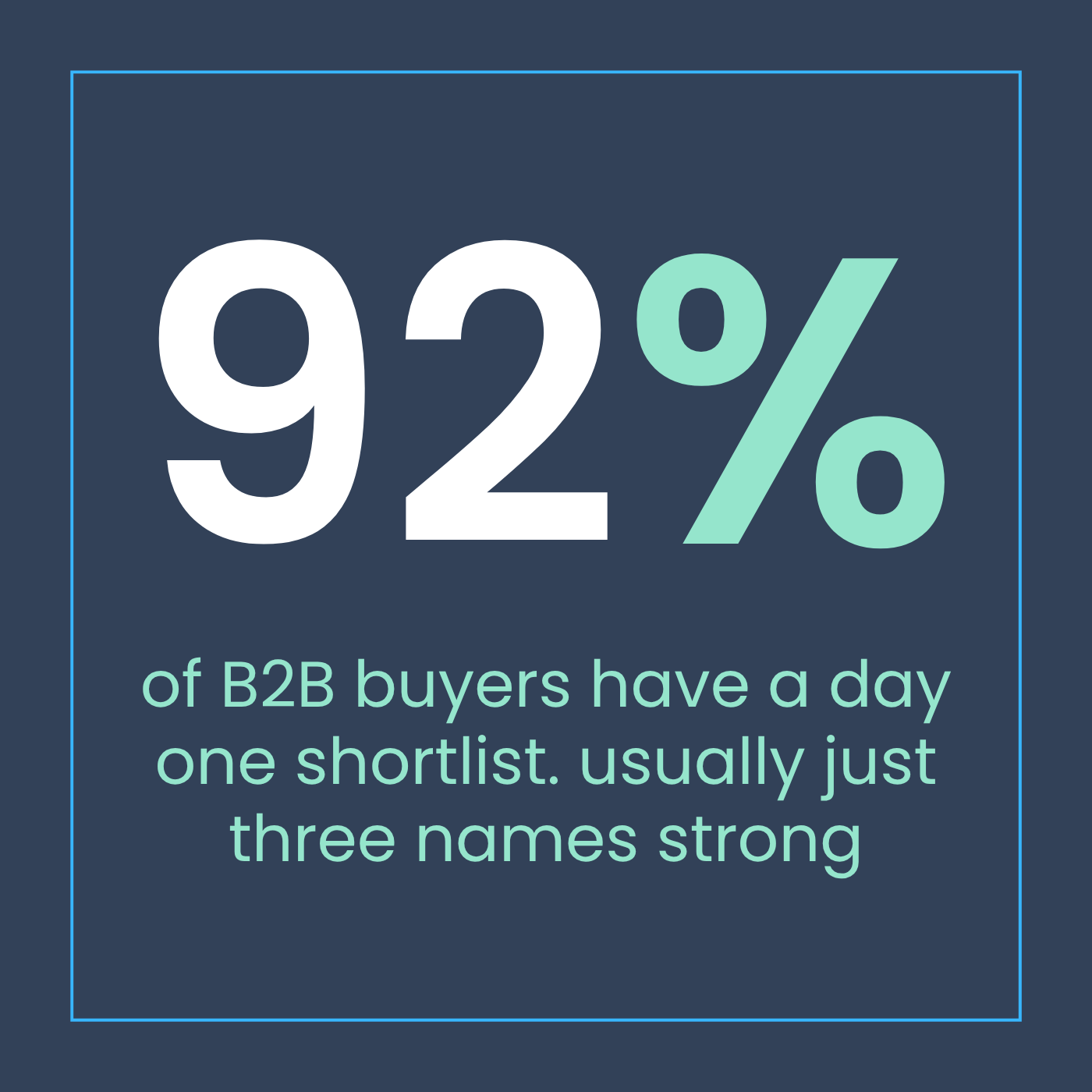
That buyer’s day one shortlist matters shed loads more than most businesses realise. Forrester’s 2024 Buyer’s Journey Survey found 92% of B2B buyers have a day one shortlist, usually just three names strong.
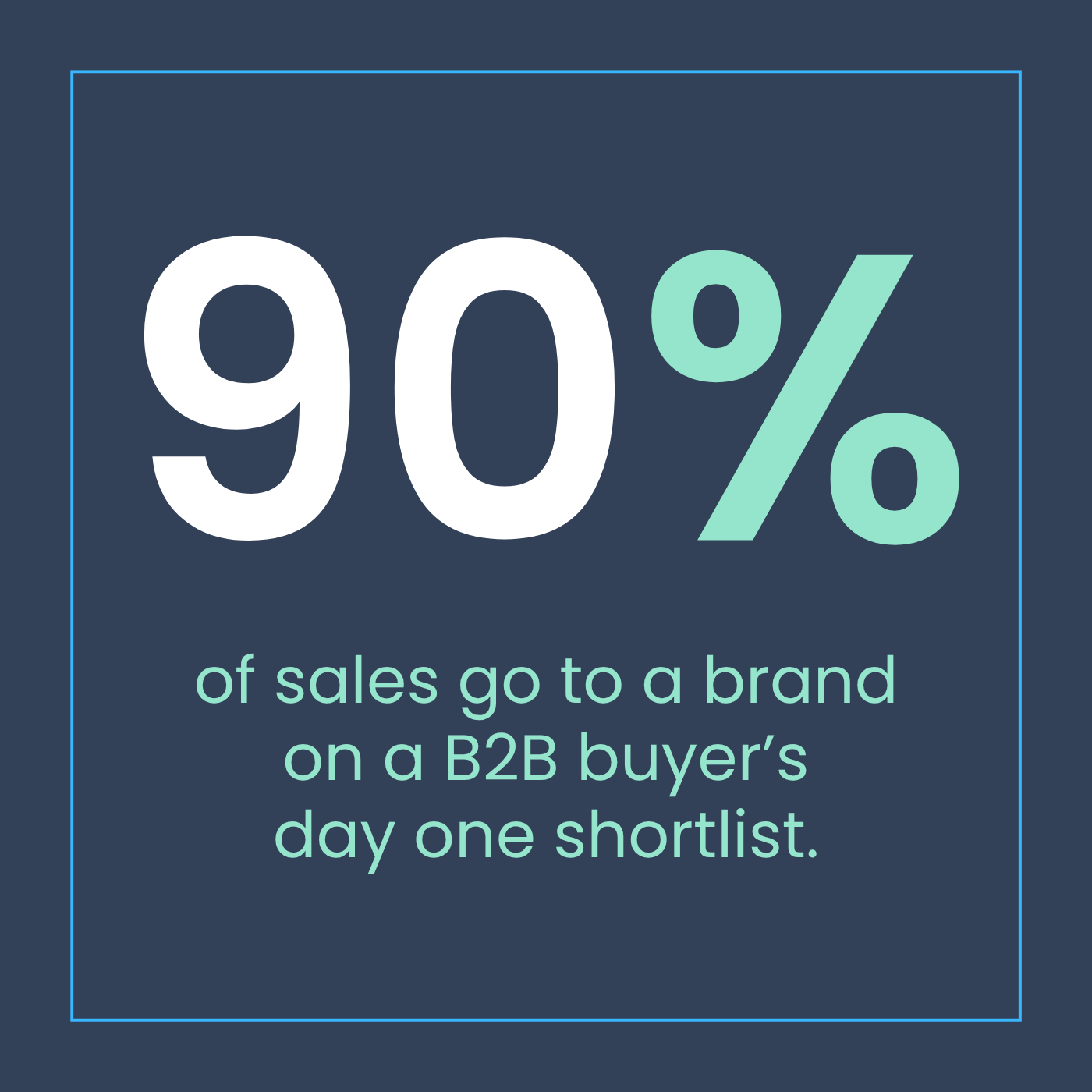
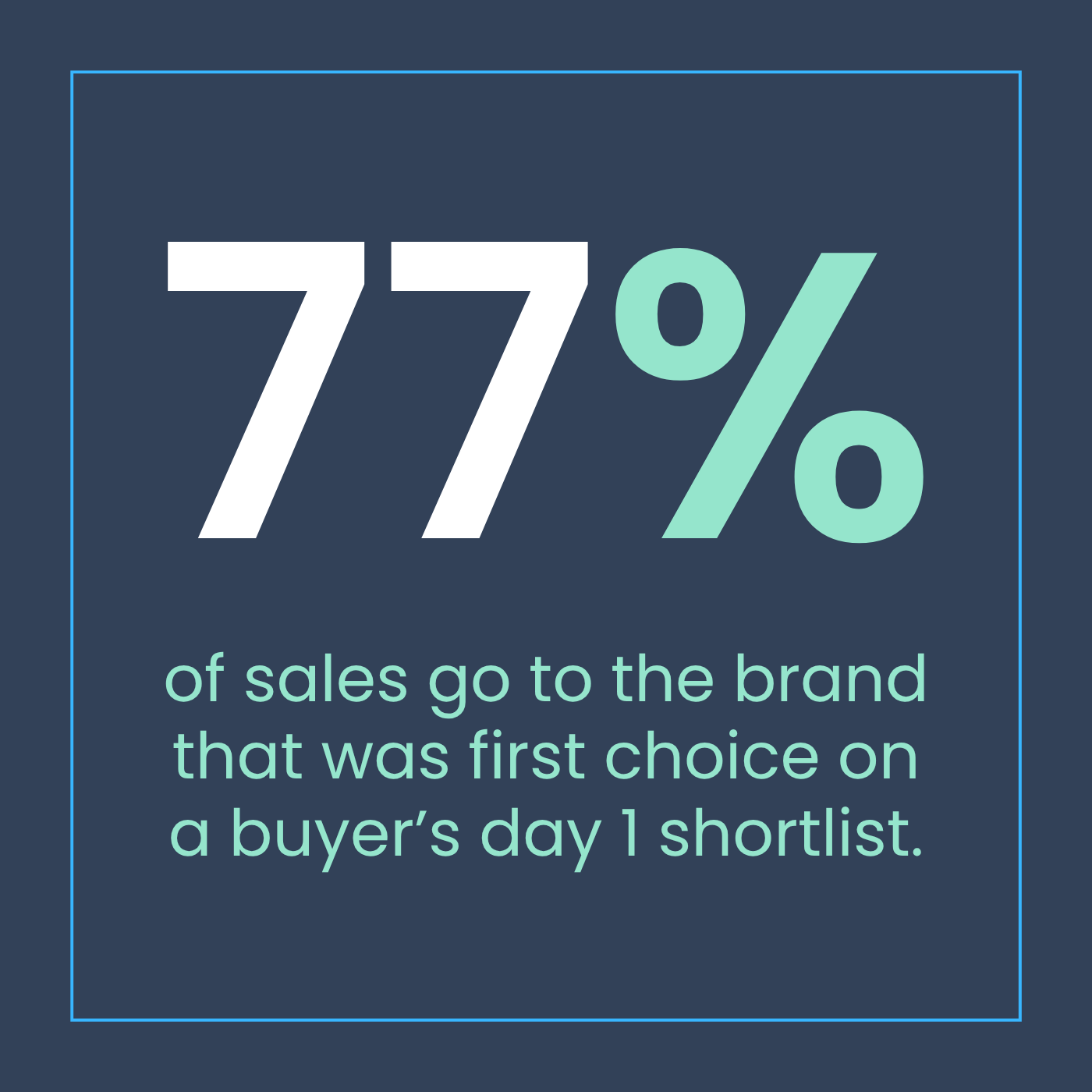
Bain & Co and LinkedIn have found 90% of B2B sales go to a brand already on that list, and 77% go to the first choice on it.
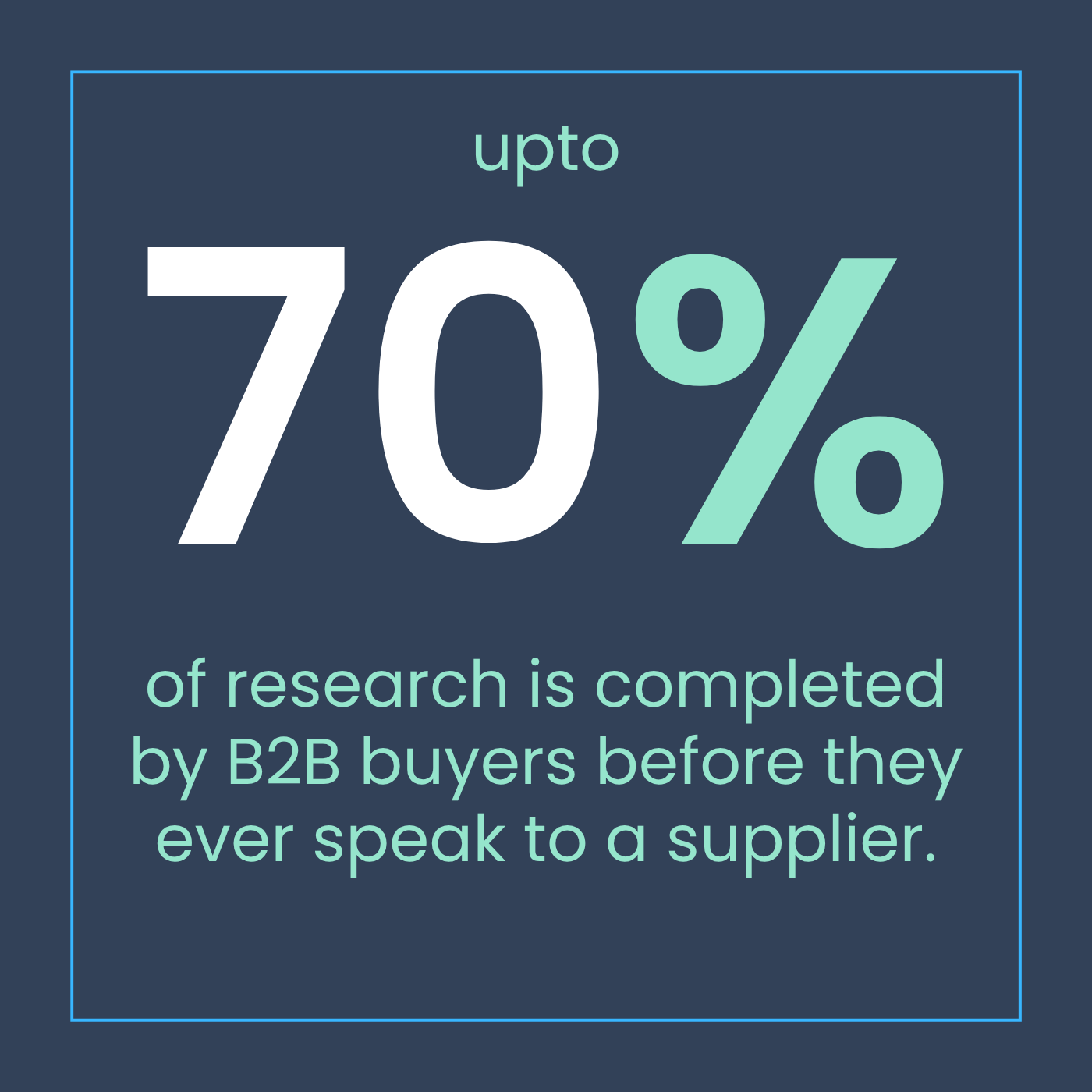
And somewhere between 57% and 70% of a buyer’s research, depending on whether you take CEB/Gartner’s figure or Forrester’s, happens before they even speak to a supplier at all. Most of the decision making happens while you’re not even in the room.
So what have you got to rely on? Your brand is the only thing representing you. It’s your competitive advantage. Use it as such!
Your marketing becomes more expensive, less effective.
Your marketing team see it first-hand. Campaigns have to work harder for less return, because every piece of activity is coming from a brand that’s pointing in the wrong direction and not making it clear to people how you help them now.
No amount of clever tactics will contribute to growth if they describe a different business to the one you are. Bit of a fundamental problem that.
And competitors no better than you (some demonstrably worse and you know it) win work because what they say about themselves matches what buyers see.
That stings. And it should. Because the businesses that win aren’t necessarily the best ones. They’re the ones that are the easiest to trust and easiest to choose.
What revisiting your brand involves.
But here’s something reassuring. Making your brand relevant again doesn’t necessarily mean the same thing as ‘we need a rebrand’. Which often means an ill-judged identity refresh.
Your brand identity: your logos, colours, design cues, distinctive brand assets, and your website and marketing materials are just the visible layer. They’re your branding, not your brand. And they’re not the first thing to change. If they need to change at all.
What’s actually been outgrown is the thinking underneath:
- your positioning – who you’re for, and why you’re the right choice for them.
- your value proposition – what problems you solve for them, and why that’s worth paying for.
- your messaging – how any of that actually reaches a buyer and lands.
That’s what determines whether your brand still effectively supports the business you are.
The questions to ask, and the answers that need to be revealed before anyone shouts: ‘we need a new logo, a modern forward-looking font, and some green in there somewhere, because my 14 year old daughter says verdant broccoli camouflage is in’ are these:
- What do we offer now?
- Who do we solve a problem for now, and who are we no longer for?
- How do we solve it better than our competitors?
- Why should someone choose us over the obvious alternatives?
- Does what we say everywhere buyers come into contact with us accurately and clearly talk about the business we’ve become?
Sometimes the answers to those questions confirm that all the brand needs a little bit of re-framing: same business, sharper story. Sometimes they can reveal there is a need for a genuine repositioning job. Either way, you can’t know which until you’ve asked the questions, done the thinking and got the answers.
Doing it ‘just because’ or guessing is how a business ends up paying for a shiny new website that still says the same wrong things, just in a slightly more attractive way. And why they need to go again to fix it 12-18 months down the line. Good money after bad and all that.
So has your business outgrown your brand? An honest test.
One thing you can do now is ask yourself one question. And answer it honestly:
Would a good-fit buyer who’s never met you, look at your brand today and see the business you’ve actually become?
If yes, you crack on. Your brand’s fit for purpose and saying what it should be saying.
If you’re not sure, if there’s any doubt, that uncertainty is information. It’s telling you something.
That question is one that’s rarely asked too early. It’s almost always asked too late. Usually after a competitor has spent a good year or so being clearer with their message. Or you’ve played it safe copying what the market leader talks about rather than what you actually offer. Except they aren’t you, are they? And they’ve only gone and moved the goalposts to now shout about something you already do rather well but haven’t focused on (that one can really hurt).
And the drift goes unnoticed for so long because the people best placed to spot it, the people on the inside, are the ones least able to see it. They know what’s changed and fill in the blanks themselves, whilst a new visitor to the website reads everything cold with none of that background knowledge.
Those five questions above are easy to write down. They’re much harder to answer honestly without someone outside the business asking them. Prodding, probing, nudging.
If you’re not sure.
If this has made you think ‘that’s us’, and you reckon you need a bit of outside help to check whether your brand’s working for you or quietly working against you, get in touch with us.
We can arrange a brand clarity call and talk it through. Just a proper conversation to find out where you are and what to do about it.